
Myofascial Release in Chapel Hill
When exercises aren’t helping, your pain may need a different starting point.
At Royal Pain, gentle hands-on treatment may start easing pain during your first visit.
Gentle treatment, guided by the movement that hurts.
Myofascial release is a hands-on approach that uses pressure and sustained contact with soft tissues. At Royal Pain, the goal goes beyond relaxation: we assess which movements hurt to guide the areas we treat.
We use myofascial release for neck, back, shoulder, hip, and knee pain when the assessment suggests it may help with pain or stiffness limiting movement.
Neck pain
Pain with turning your head, workouts, desk work, or sleep.
Explore your symptomsBack pain
Pain with bending, lifting, exercise, or everyday activities.
Explore your symptomsShoulder pain
Pain with reaching, lifting weights, exercise, or sleeping on your side.
Explore your symptomsHip pain
Pain with squatting, running, hiking, or climbing stairs.
Explore your symptomsKnee pain
Pain with squatting, lunging, running, or hiking.
Explore your symptomsRelief is a starting point. Let’s build on it.
Many patients notice relief during the first visit. We retest the painful movement to guide treatment, then address contributing stiffness, weakness, or movement limitations to work toward lasting relief.
Assess first.
At Royal Pain, we examine the movement that hurts and use a hands-on assessment to look for what may be contributing to your pain.
Treat and recheck.
We treat what we believe is contributing, then repeat the painful movement to check whether your symptoms improve. Your response guides what we do next.
Build on the response.
We use what helps to guide your treatment and show you what to do at home—so you can build on the relief and address what’s contributing to your pain.
Your assessment guides the technique.
Dr. Derek Nielsen, PT, DPT has trained in the John F. Barnes Myofascial Release Approach. At Royal Pain, movement assessment and your treatment response guide how he uses this hands-on technique.
Meet Dr. NielsenQuestions about myofascial release at Royal Pain.
How is myofascial release at Royal Pain different from a typical massage?
The goal goes beyond relaxation. Dr. Derek Nielsen, PT, DPT assesses the movement that hurts to identify which muscles and areas may need attention. That guides where he applies myofascial release. He then repeats the movement to check whether it feels better—and uses your response to guide the next step.
Can myofascial release help if exercises haven’t worked?
If exercises haven’t helped, we look at what may be preventing progress. At Royal Pain, myofascial release may help ease pain and stiffness so you have a different starting point. We recheck the painful movement to see whether it helps, then use your response to guide what comes next.
What can I do at home to build on the relief?
We provide a self-myofascial release tool suited to your problem and show you exactly how to use it—including where to apply it, what you should feel, and when and how often to use it. You’ll leave with a practical way to continue working on pain relief and stiffness at home.
Will I be sore after myofascial release?
You may notice some muscle soreness afterward, similar to after exercise. At Royal Pain, the treatment is gentle, and we adjust the pressure based on how it feels to you.
Will myofascial release solve the problem, or is it just temporary relief?
At Royal Pain, we use myofascial release as a starting point for pain relief. Then we work on the stiffness, weakness, or movement problems that may be contributing—so we can build on that relief and work toward lasting improvement.
How quickly will I know whether myofascial release is helping?
Many of my patients notice relief during the first visit. We repeat the painful movement to see whether it feels better. If it doesn’t, we reassess and look at what else may be contributing rather than simply repeating the same treatment.
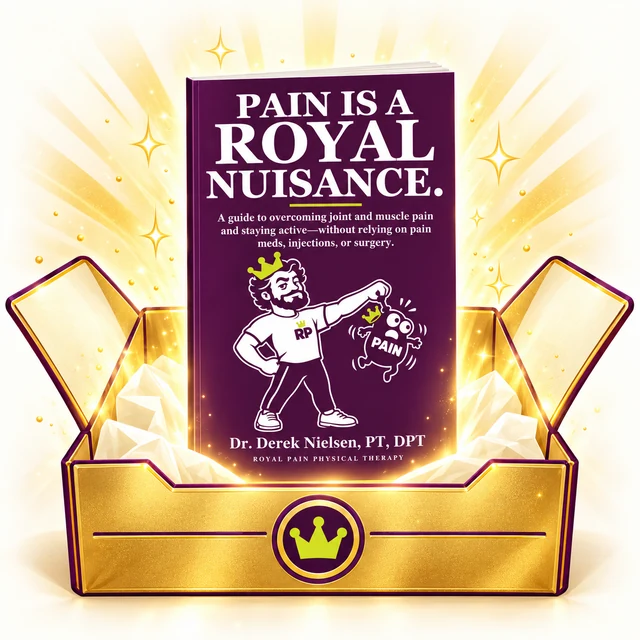
Not ready to book an appointment yet?
Get a free copy of Pain Is a Royal Nuisance and discover a process for addressing what may be keeping you in pain—without relying on medication or surgery.
Understand your options before deciding.
Talk with Dr. Nielsen about your pain, whether myofascial release could help, and where he would start based on your symptoms.