
Dry Needling in Chapel Hill
Start with relief. Build toward lasting change.
At Royal Pain, dry needling starts with an assessment—not an assumption. Let’s find out whether it could help your pain and what to work on next.
The place that hurts isn’t always the only place that needs treatment.
Sometimes a muscle contributes to pain felt somewhere else. Dr. Derek Nielsen, PT, DPT uses movement testing and hands-on assessment to explore what may be contributing before recommending dry needling.
Dry needling uses a thin, solid needle in muscle tissue, without injecting medication. At Royal Pain, it is one tool within your physical therapy plan—not a substitute for understanding your symptoms.
Relief is a starting point. Let’s build on it.
Some patients notice less pain right after dry needling. At Royal Pain, we use that response to help guide the next step—not assume the problem is solved.
Dr. Nielsen then addresses the stiffness, weakness, or movement limitations that may be contributing, with the goal of helping you move beyond temporary relief.
Assess first.
At Royal Pain, we examine the movement that hurts and use a hands-on assessment to look for what may be contributing to your pain.
Treat and recheck.
We treat what we believe is contributing, then repeat the painful movement to check whether your symptoms improve. Your response guides what we do next.
Build on the response.
We use what helps to guide your treatment and show you what to do at home—so you can build on the relief and address what’s contributing to your pain.
Your assessment guides the technique.
Dr. Derek Nielsen, PT, DPT was certified in dry needling through Myopain Seminars. He combines that training with an assessment of your symptoms, movement, and treatment response.
Meet Dr. NielsenQuestions about dry needling at Royal Pain.
Can dry needling help with pain?
Dry needling may help reduce pain and make movement easier. At Royal Pain, we first assess your symptoms and movement to determine whether dry needling makes sense for your problem—or whether another approach is a better next step. If we use it, we check whether it helps your symptoms and use that response to guide what we do next. Research source
Does dry needling hurt—and what if I’m nervous about needles?
Dry needling can cause some mild discomfort. At Royal Pain, we may use dry needling to help kick-start pain relief. If you’d rather avoid needles—or dry needling isn’t appropriate for you—we can use other approaches, including myofascial release, to work toward relief.
Will dry needling solve the problem, or will the pain come back?
Dry needling can help your pain feel better quickly, but that doesn’t mean the problem is solved. At Royal Pain, we also address the stiffness, weakness, and movement problems that may be contributing—so we can build on that relief and work toward lasting improvement.
How quickly will I know whether dry needling is helping?
Many of my patients notice a difference right after treatment. We recheck the painful movement to see what changed. If there’s no immediate improvement, we reassess what may be contributing and whether another approach would help—we don’t simply repeat dry needling and hope it works.
Will I be sore after dry needling?
You may notice temporary muscle soreness, similar to after a workout. It usually settles within one to two days.
Can I exercise after dry needling?
Yes—dry needling doesn’t automatically mean taking a break from exercise. At Royal Pain, we discuss how to keep you active based on what we treated and how you respond.
How is dry needling different from acupuncture?
Both use thin needles, but the assessment and treatment approach differ. Acupuncture has roots in traditional Chinese medicine. At Royal Pain, we use dry needling to target muscles that may be contributing to your pain. Your response helps guide the next step in a broader plan for lasting relief.
How do you decide whether dry needling is right for me?
Dr. Derek Nielsen, PT, DPT starts with the movement that hurts and a hands-on assessment. If the findings suggest a muscle may be contributing to your pain—even away from where you feel it—he may recommend dry needling. The decision is based on your assessment, your preferences, and whether it fits your treatment plan.
Prefer a hands-on option without needles? Explore myofascial release at Royal Pain.
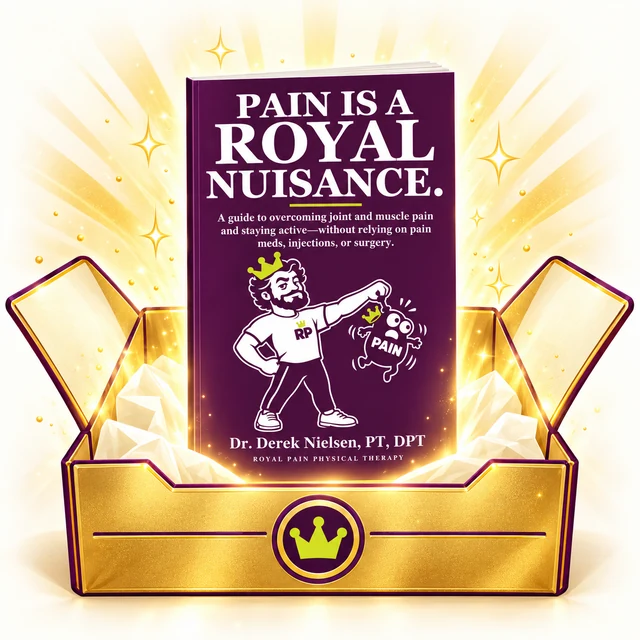
Not ready to book an appointment yet?
Get a free copy of Pain Is a Royal Nuisance and discover a process for addressing what may be keeping you in pain—without relying on medication or surgery.
Understand your options before deciding.
Talk with Dr. Nielsen about your pain, whether dry needling could help, and where he would start based on your symptoms.